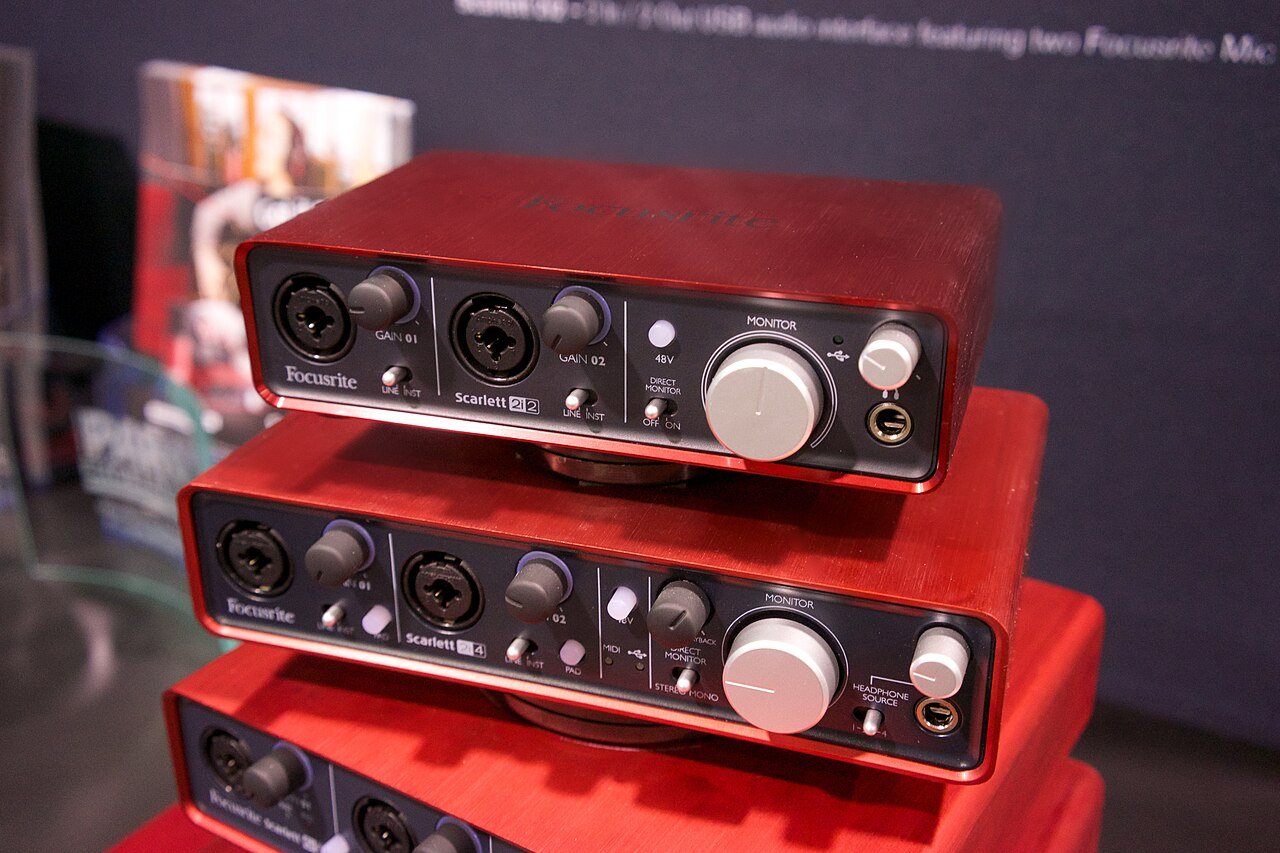
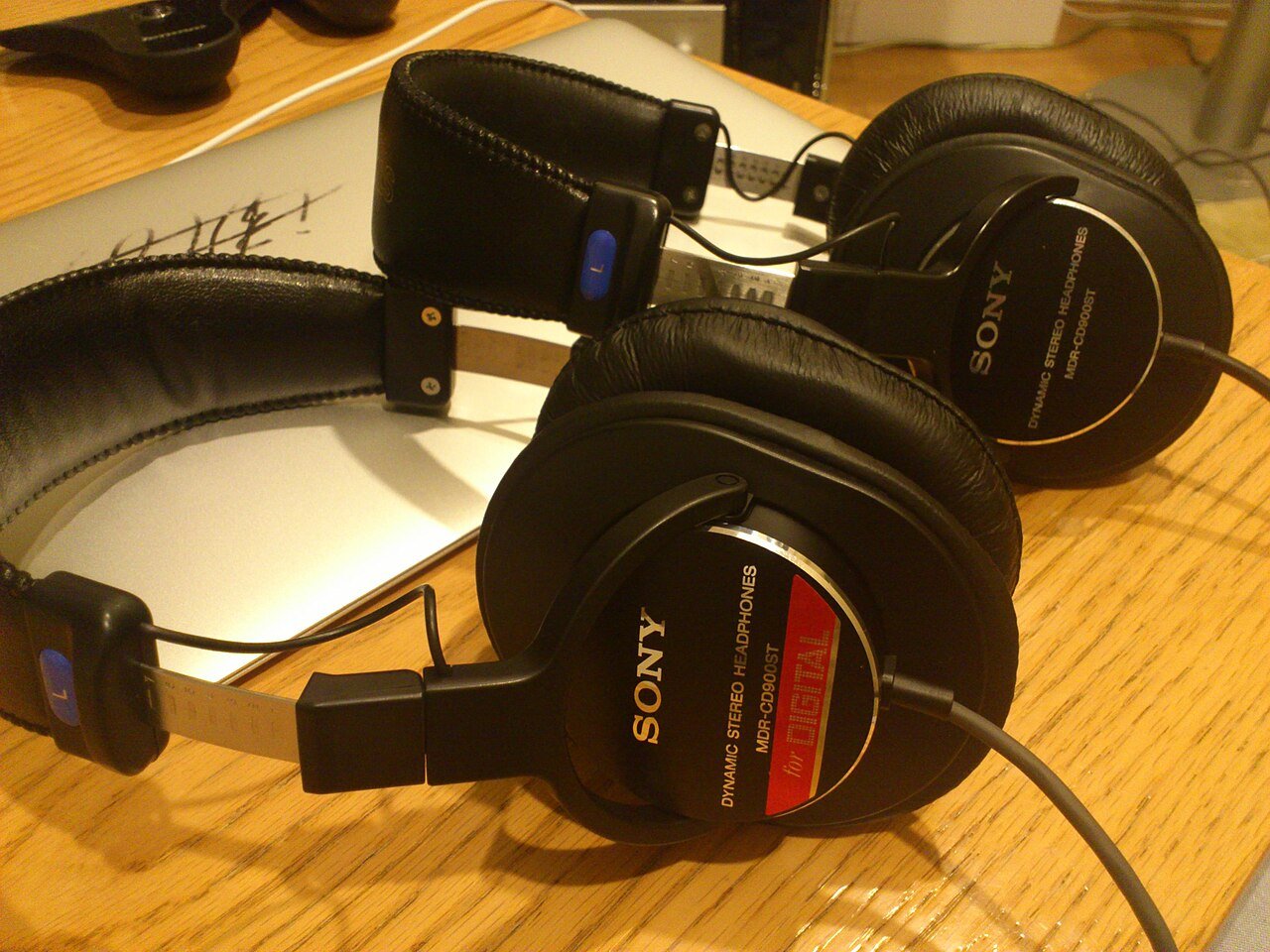
An audio interface connects microphones, instruments and speakers to your computer, and it usually gives you better sound and lower latency than a computer's built-in audio. Most home producers only need a small one. These five questions narrow it down.
1. How many things will you record at the same time?
One voice or one guitar: a 1- or 2-input interface is enough. Singing while playing guitar: 2 inputs. A full drum kit or a band playing together: 8 inputs or more. Count simultaneous sources, not total instruments.
2. Will you use a condenser microphone?
Condenser mics need 48V phantom power. Nearly all interfaces offer it, but check before you buy, and check whether it can be switched per input or only for all inputs at once.
3. Will you plug in a guitar or bass directly?
Look for an input marked Hi-Z or Inst. It is designed for the signal from a guitar pickup. Plugging a guitar into a mic input without one usually sounds thin.
4. Do you stream or make content?
Loopback lets you send computer audio (a backing track, a call, your DAW) and your mic into a stream or recording together. It is very useful for creators and not essential for pure music production.
5. Does it work well with your computer?
Check that the manufacturer provides current drivers for your operating system, and on Windows, a dedicated ASIO driver. Most modern interfaces use USB-C; make sure you have a matching port or a reliable adapter.
Specs that matter less than you'd think
Sample rates above 96 kHz and very high quoted dynamic range numbers rarely make an audible difference in a home studio. A clean preamp, solid drivers and the right inputs matter more.
Want to avoid the most common recording problem? Read our latency guide and gain staging guide.
About this guide
This guide explains widely used production practice and contains no statistics or product claims that need an outside source. See our editorial standards.